Let’s dance – life lessons from a thousand year old statue
22/05/22 09:00 Filed in: Yoga
There is a large statue of a dancing Shiva Nataraj in the grounds of the CERN labs in Switzerland, where the W and Z bosons were discovered, and the World Wide Web was invented. The location underlines the parallels between the work of modern scientists and that of ancient yogis, both working to decode “the cosmic dance.”
While we could talk about the science of creation and how to take ourselves to our maximum potential, the main takeaway is it doesn’t matter at what level of evolution we currently are at because there is always room for growth and expansion.
We all start somewhere, and change doesn’t happen overnight. If we set our egos aside and apply knowledge to improve ourselves, we can grow to be more than what we are.
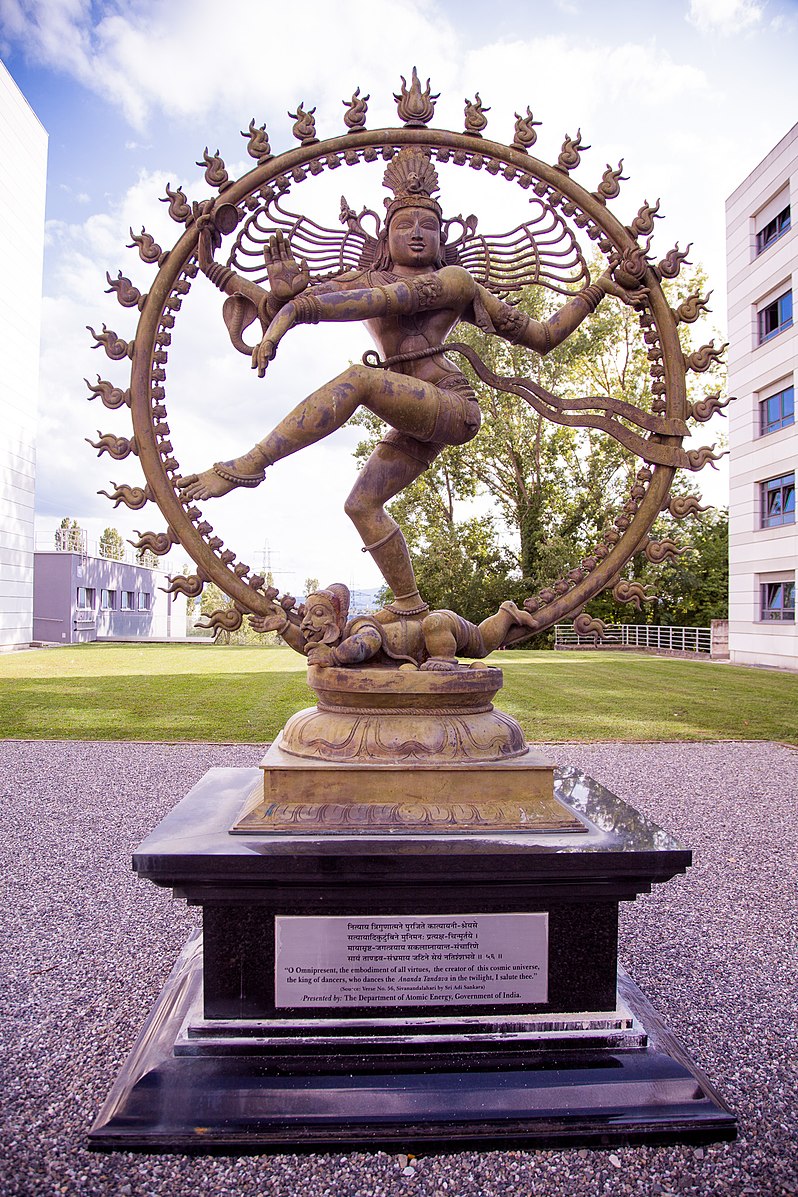
Looking at the statue beyond the surface, it is beautifully filled with symbolic and universal meaning. Shiva Nataraja means king of the dancers. This specific style of the statue was perfected over 1,000 years ago in Southern India, although the ideas it embodies are much older.
There are five different statue types, each representing a different step in Shiva’s dance. Let’s unpack some of the features of the typical studio or home-sized statue shown above:
- The ring represents the material world.
- Within it, Lord Shiva is dancing creation and destruction, birth, and death in His cosmic play.
- His long yogic hair streams out to touch the very edges of the universe.
- He has four arms.
- His upper right-hand holds a drum, symbolizing creation.
- His upper left-hand holds fire, symbolizing destruction.
- His lower right-hand is held in a gesture of “do not fear” … and a cobra is close at hand!
- His lower left-hand points down to a demon beneath him.
- His right foot is breaking the back of that demon, who represents the ego, ignorance, and low states of consciousness.
- The left foot is raised and symbolizes spiritual confrontation.
While we could talk about the science of creation and how to take ourselves to our maximum potential, the main takeaway is it doesn’t matter at what level of evolution we currently are at because there is always room for growth and expansion.
We all start somewhere, and change doesn’t happen overnight. If we set our egos aside and apply knowledge to improve ourselves, we can grow to be more than what we are.